FBA prep supplies: the complete DIY checklist.
Since Amazon ended its in-house prep service on January 1, 2026, every unit arrives at the fulfillment center already prepped, by you or by a prep center. This is the full self-prep kit: what each item is for, the spec that actually matters, and what it costs per unit once you are running. Prices and ratings were checked on Amazon on August 16, 2026; they move.
9 items that cover nearly all self-prep.
Each row names the requirement it exists to satisfy (the full rulebook lives on our FBA prep requirements page). Ratings and review counts are Amazon's own aggregates on the check date, not our testing.
| Item | The spec that matters | Requirement covered | Price · rating |
|---|---|---|---|
Thermal label printer (the workhorse pick)Rollo USB Shipping Label Printer, 4x6 direct thermal | Direct thermal (no ink or toner ever), prints 4x6 shipping labels and FNSKU sheets cut to size, works with Seller Central PDFs out of the box. | FNSKU unit labels + FBA box labels + carrier labels, one machine. | $199.99 |
Thermal label printer (the budget pick)MUNBYN Bluetooth Thermal Label Printer, 4x6 | Same direct-thermal mechanism at roughly 40% of the Rollo price. Bluetooth plus USB. The tradeoff is slower duty cycle at volume. | Same coverage as the Rollo, at hobby-volume speeds. | $75.76 |
FNSKU label sheets (no-thermal-printer path)Coopaty 30-Up FBA Labels, 1 x 2-5/8 inch, 500 sheets (15,000 labels) | 30-up on letter paper is the layout Seller Central's print-item-labels PDF expects. Works in any laser printer you already own; Amazon says not to use an inkjet for its barcodes. About $0.0025 per label. | FNSKU on every unit (universal for resellers since commingling ended March 31, 2026). | $36.99 |
4x6 direct thermal label stock9527 Fanfold 4x6 Direct Thermal Labels, perforated, 500 count | Fanfold stacks feed straight through a Rollo or MUNBYN without a roll holder. $0.02 per label for box and carrier labels. | FBA box ID labels and carrier labels. | $9.99 |
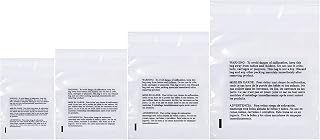
Poly bags with suffocation warningSuffocation-warning poly bags, 400-count combo (6x9, 8x10, 9x12, 11x14), self-seal | Pre-printed suffocation warning satisfies the 5-inch-opening rule without a separate sticker step. Around $0.075 per unit. Confirm the 1.5 mil thickness on the size you order; Amazon refuses thinner bags. | Polybagging for apparel, liquids, small parts, dust-generating and loose products. | $29.99 |
Impulse heat sealer12-inch impulse heat sealer for PE/PP poly bags | Amazon requires bags fully sealed. A 12-inch element handles every bag in the combo pack above; self-seal strips work too but a heat seal survives FC handling better on heavy units. | The fully-sealed-bag rule. | $23.99 |
Label removersScotty Peelers, 3 plastic + 1 metal blade | The retail-arbitrage standard for clearing price stickers and old barcodes. A visible original UPC next to an FNSKU is a receiving defect. | Cover-or-remove rule for manufacturer barcodes under an FNSKU. | $13.99 |
| Box weights feed the shipment plan and the 50 lb single-box ceiling. 0.1 oz precision also catches unit-weight drift that changes your FBA size tier. | Accurate box weights for shipment plans; the 50 lb box limit. | $18.05 | |
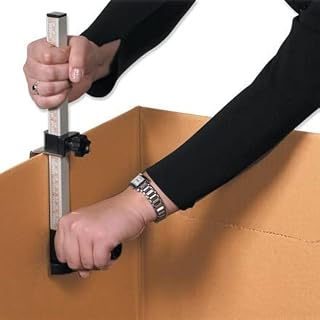
Box resizerBox resizer tool with scoring wheel | Cuts reused cartons down so contents do not rattle. Amazon charges for oversized or under-filled boxes indirectly through dimensional handling and damage rates. | Right-sized cartons under the 25-inch side limit without buying every box size. | $16.99 |




DIY prep is cheap in supplies and expensive in hours.
The consumables are trivial: a suffocation-warning bag runs about $0.075, an FNSKU label under a cent, and a fair share of tape and box stock brings a typical bagged, labeled unit to roughly $0.08 to $0.10 in materials. Nobody outsources prep to save on poly bags.
The real line item is time. Receiving, inspecting, bagging, sealing, labeling, and boxing runs 2 to 4 minutes per unit for most sellers once you include the shipment-plan work. At 500 units a month that is 17 to 33 hours of repetitive work, every month, before a single listing gets improved or a single new product gets sourced. Labeling on its own is the fastest step and the one sellers most often keep in house; our FNSKU labeling guide runs that break-even separately.
The outsourcing comparison is one number: US prep centers charge a median of $1.30 per unit at entry volume (our Pricing Index 2026, deduped across 44 US centers; see the Pricing Index). Against 2 to 4 minutes of your own time plus a dime of materials, the crossover lands between roughly 300 and 800 units a month depending on what your hour is worth.
Outsourcing also moves the crossover earlier when the work itself is harder: hazmat and SDS handling, meltable-window storage, FDA-regulated categories, or staging inventory in a sales-tax-free state. The full framework is in our buyer's guide.
Get matched to verified prep centers instead.
Tell us your monthly volume and categories. We hand-match you to up to 5 prep centers that cleared our 4-point verification standard, with current rate cards. Free, no account required.
Common FBA supply questions.
What supplies do I need for Amazon FBA prep?
What size labels do I need for Amazon FBA?
Do I need a thermal printer for FBA labels?
Can I print FBA labels on a regular printer?
What poly bags does Amazon FBA require?
How much does it cost to prep FBA inventory yourself?
When does outsourcing beat DIY FBA prep?
Related references.
Amazon FBA prep requirements
Every rule this kit exists to satisfy: polybag specs, FNSKU placement, drop tests, expiration formats.
Open the requirements →
What FBA prep centers charge
Per-unit benchmarks to weigh against your own hours once volume grows.
Open the fee benchmarks →
How to choose an FBA prep center
The 5-question checklist for when the DIY crossover arrives.
Open the buyer's guide →
Verified FBA prep centers
The ranked, verification-dated list to start from when outsourcing wins the math.
Browse verified centers →
FBA Prep Pricing Index 2026
Where the $1.30 median per-unit rate on this page comes from.
Open the index →
What is FBA prep?
The primer, if you have never prepped or outsourced a unit before.
Read the primer →
FNSKU labels: print them or pay someone
What the printer and label stock in this kit are actually for, and the hourly rate at which buying them stops making sense.
Run the labeling math →
As an Amazon Associate, FBA Prep Finder earns from qualifying purchases. Product links on this page use our affiliate tag. Prices, ratings, and review counts were checked on August 16, 2026 and change without notice; the live Amazon listing always governs.